Hidden rarity often escapes the untrained eye.
Visible flaws do not always result in lower final hammer prices of the most valuable quarters at major auctions.
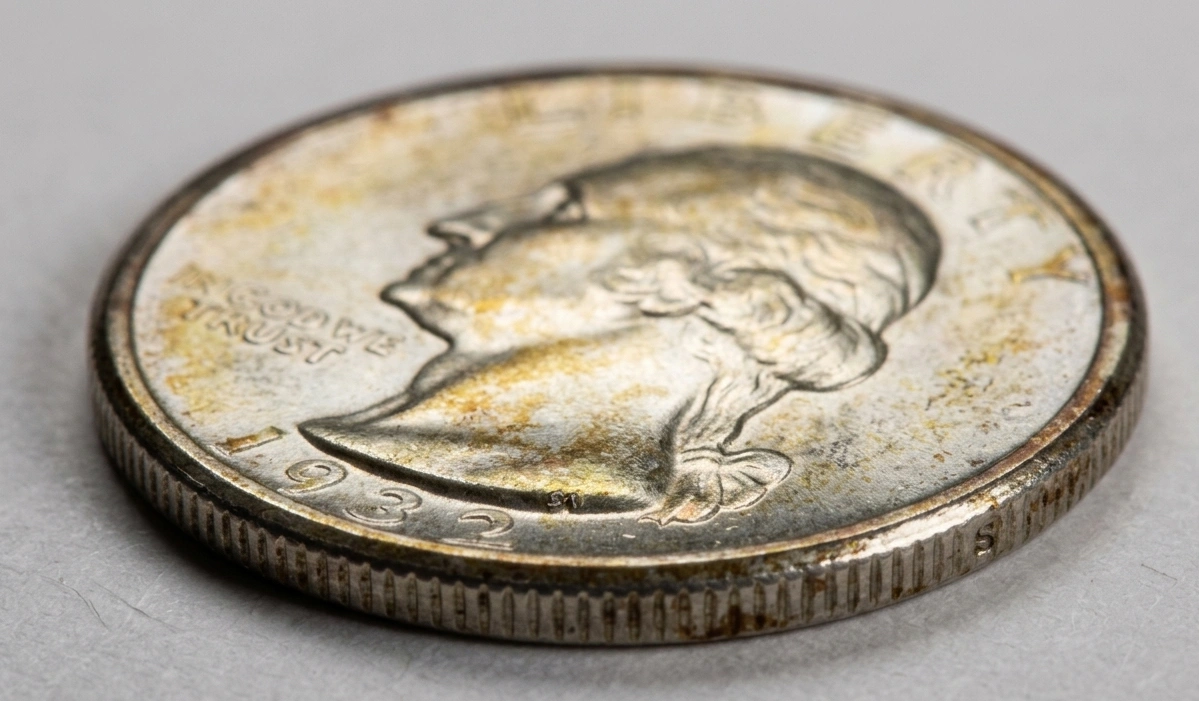
Coin Type | Years Produced | Metal Mixture | Weight | Diameter |
Barber Quarter | 1892–1916 | 90% Silver, 10% Copper | 6.25 g | 24.3 mm |
Standing Liberty | 1916–1930 | 90% Silver, 10% Copper | 6.25 g | 24.3 mm |
Washington Silver | 1932–1964 | 90% Silver, 10% Copper | 6.25 g | 24.3 mm |
Washington Clad | 1965–Present | 75% Copper, 25% Nickel | 5.67 g | 24.3 mm |
Bicentennial 40% | 1975–1976 | 40% Silver, 60% Copper | 5.75 g | 24.3 mm |
Switching to copper-nickel clad compositions in 1965 followed a shortage of silver in the US government reserves.
Losing 0.58 grams of mass during this transition fundamentally changed the acoustic properties of the coin.
Factors Driving 2026 Auction Outcomes
Final bids at public sales emerge from three independent data vectors.
Auction house algorithms calculate the frequency of similar grades over ten-year cycles.
Condition Rarity
Instances of MS67+ Washington Quarters from 1932 represent less than 1% of all certified copies. Lacking contact marks on the portrait increases the price exponentially.
Visual Appeal
Evenly distributed toning on silver surfaces counts as a technical advantage. Using high-resolution scanners reveals rainbow-like oxidation layers.
Lustre Quality
Preserving original metal grain after the strike determines the status of the coin. Failing to maintain lustre due to improper cleaning drops value by 60% or more.
Current 2026 statistics show increased interest in coins with proven pedigree from famous collections.
Auction Records and Yearly Growth Rates
Analyzing Heritage Auctions and Stack's Bowers data highlights growth leaders in the 25-cent segment.
Investment returns for rare dates exceed S&P 500 performance over long-term periods.
1932-S Washington Quarter
Mintage: 408,000 units
Record Price at MS66: $45,000
Yearly Value Increase: 5.2%
1932-D Washington Quarter
Mintage: 436,800 units
Record Price at MS66: $143,750
Yearly Value Increase: 6.8%
1916 Standing Liberty Quarter
Mintage: 52,000 units
Record Price at MS67 FH: $195,500
Yearly Value Increase: 7.1%
Price drops of 2–3% occur only for coins below EF40 due to excess supply.
Rare reverse types demonstrate resilience against market volatility.
Grading Dynamics: Cause and Effect
Professional laboratories and the coin scanner app free utilize strict verification protocols.
Documenting every deviation from the standard occurs in the certificate of authenticity.
Cause → Effect:
Debris on the die → Missing fine detail on the eagle wings
Excessive striking pressure → Metal stress cracks appearing on the rim
Storage in paper envelopes → Development of dark circular toning
Using harsh acids → Porous surface structure
Condition Grade | Technical Description | Market Multiplier |
MS68 | Full lustre, zero scratches at 10x | 5.0 |
MS65 | 1-2 microscopic marks allowed | 1.0 |
MS63 | Visible contact damage in the field | 0.4 |
AU55 | Wear appearing on Washington’s hair | 0.15 |
XF45 | Sharp lettering despite general wear | 0.08 |
Macro-photography software calculates the reflection index of the coin field.
Objects reaching an index above 0.85 receive a Prooflike classification.
Specialty Varieties and Mint Errors
Bidding at 2026 auctions often favors mint errors over standard perfect examples.
Manufacturing process failures create unique artifacts with verifiable traits.
Doubled Die Obverse (DDO)
Striking the blank twice with the die creates this effect. Showing clear doubling on the date digits defines this variety.
Off-Center Strike
Misaligning the blank relative to the press center causes this error. Value increases when the date remains visible on the metal.
Repunched Mint Mark (RPM)
Applying the mint mark manually a second time results in this variation. Finding this error is common for coins produced before 1989.
1937 Washington Quarter Doubled Die Obverse remains the benchmark for this class.
Pricing for an MS65 specimen reaches $15,000 while standard coins sell for $100.
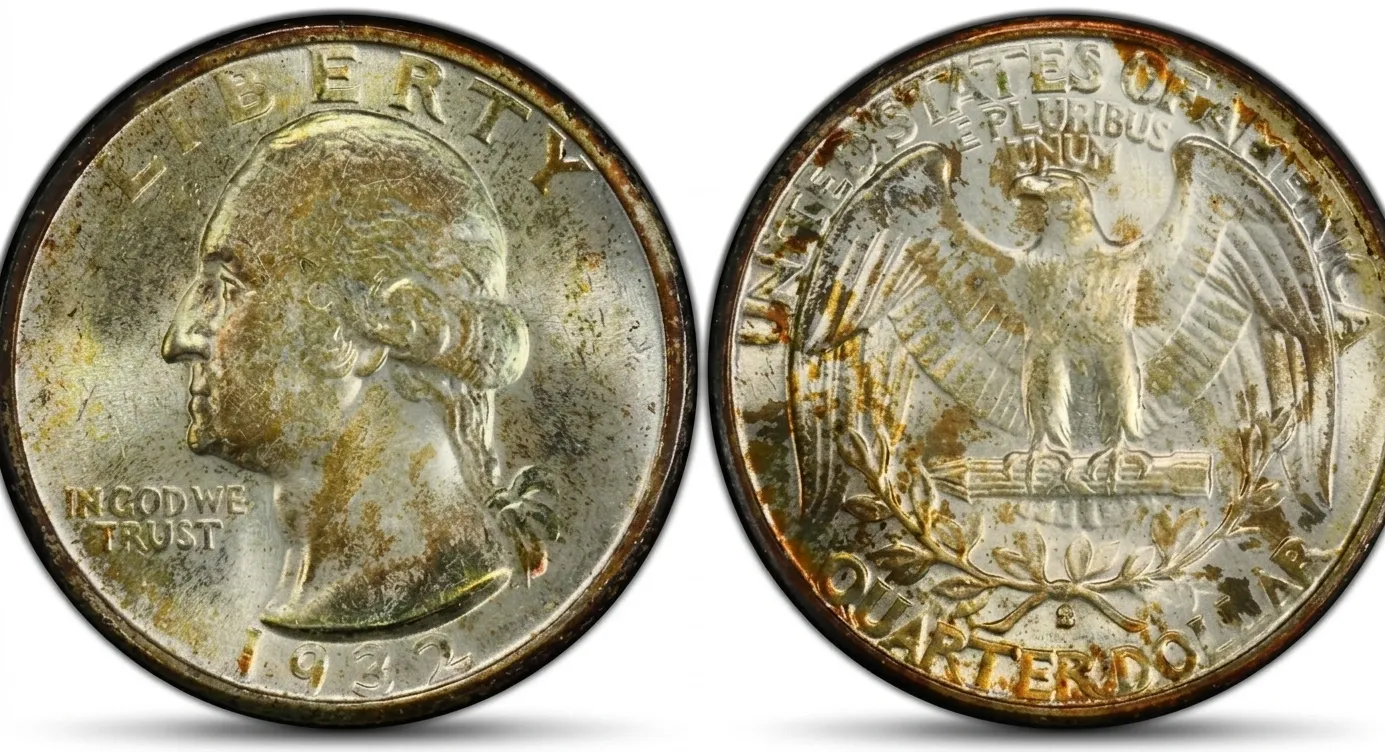
Mint Marks
Production location determines the supply volume on the market.
Coins from Denver and San Francisco in the early 20th century featured limited mintages.
D → Denver. Being harder, Denver dies often produced sharper relief.
S → San Francisco. Specializing in collector series and improved strike quality.
P → Philadelphia. Historically the main mint, often omitting its mark.
W → West Point. Modern 2019–2020 releases with 2,000,000 units per date.
Statistical analysis shows West Point quarters in MS67 increased 200% since release.
Entering circulation directly instead of being sold to collectors drove this scarcity.
Impact of Full Head Status on Standing Liberty Value
Key technical parameters for the Standing Liberty type focus on head detail.
Possessing all helmet and hair details confirms maximum striking force.
→ Standard Strike: Head details blending into the field. → Full Head: Revealing three laurel leaf branches and the ear line. → Financial Difference: Price jumps of 300–500% over standard grades.
Auction data confirms investors ignore specimens lacking the FH mark when building elite portfolios.
Utilizing 3D modeling allows confirming FH traits even through heavy toning.
Technical Aspects of the State Quarters Series (1999–2008)
Changing the structure of the numismatic market, the 50 States program launched a new era.
Massive mintages make only perfect condition specimens valuable.
Examples of Rare Series Errors:
2004-D Wisconsin Extra Leaf Low. Finding an extra leaf on the corn cob bottom. Price at MS67: $2,500.
2004-D Wisconsin Extra Leaf High. Finding an extra leaf at the top. Price at MS67: $2,800.
2005-P Minnesota Extra Tree. Duplicating landscape elements.
Auction search filters now automatically detect these deviations.
Finding these coins in bank bags in 2026 remains statistically improbable.
Edge Condition and Authenticity Testing
Coin edges contain data about the blank cutting method.
Silver coins maintain a constant number of reeds.
Washington Quarter: 119 reeds.
Barber Quarter: 120 reeds.
Deviating from standard reed geometry indicates a cast counterfeit.
Applying a wrench for a "sound test" deforms the edge and excludes the coin from grading.
Technical expertise includes measuring reed pitch with laser interferometers.
Surface Degradation and Metal Corrosion
Copper-nickel quarters resist environmental damage better than silver ones.
Interacting with sulfur in the atmosphere still creates permanent staining.
Damage Types:
PVC Residue. Creating a sticky green substance from cheap storage albums.
Pitting. Destroying metal structure through moisture exposure.
Milk Spots. Resulting from improper blank cleaning at the mint.
These defects reduce auction appeal by 50–90%.
Professional conservation can remove residue without scratching the original surface.
Auction Security Protocols
Modern sales integrate with global databases of stolen coins.
Every lot undergoes automatic verification by the slab serial number.
Information systems check:
Plastic holder authenticity.
Evidence of slab tampering.
Digital image matching between registry and physical object.
Ownership history over the last 30 years.
Using NFC tags in grading certificates eliminates label switching possibilities.
Survival Statistics
Total known specimens in a specific grade drive the market price.
Introducing a new MS68 specimen can crash the price of a previous "none finer" example.
Top Pop Grade: 1-3 coins
High Grade: up to 100 coins
Common Grade: over 1,000 coins
Analytical reports update in real-time.
Investors use the coin appraisal app free data to set limit orders during live bidding.
Design Impact on Wear: Barber vs Washington
Different artistic choices affect mechanical load distribution.
High relief on the Barber Quarter caused central elements to flatten quickly.
→ Barber: Horizontal crown lines disappearing first. → Washington: High point at the temple losing lustre upon first contact. → Standing Liberty: Character knee wearing down fastest.
Identifying wear points helps evaluate lots from photographs.
Software highlighting tools now pinpoint detail loss by color coding.